
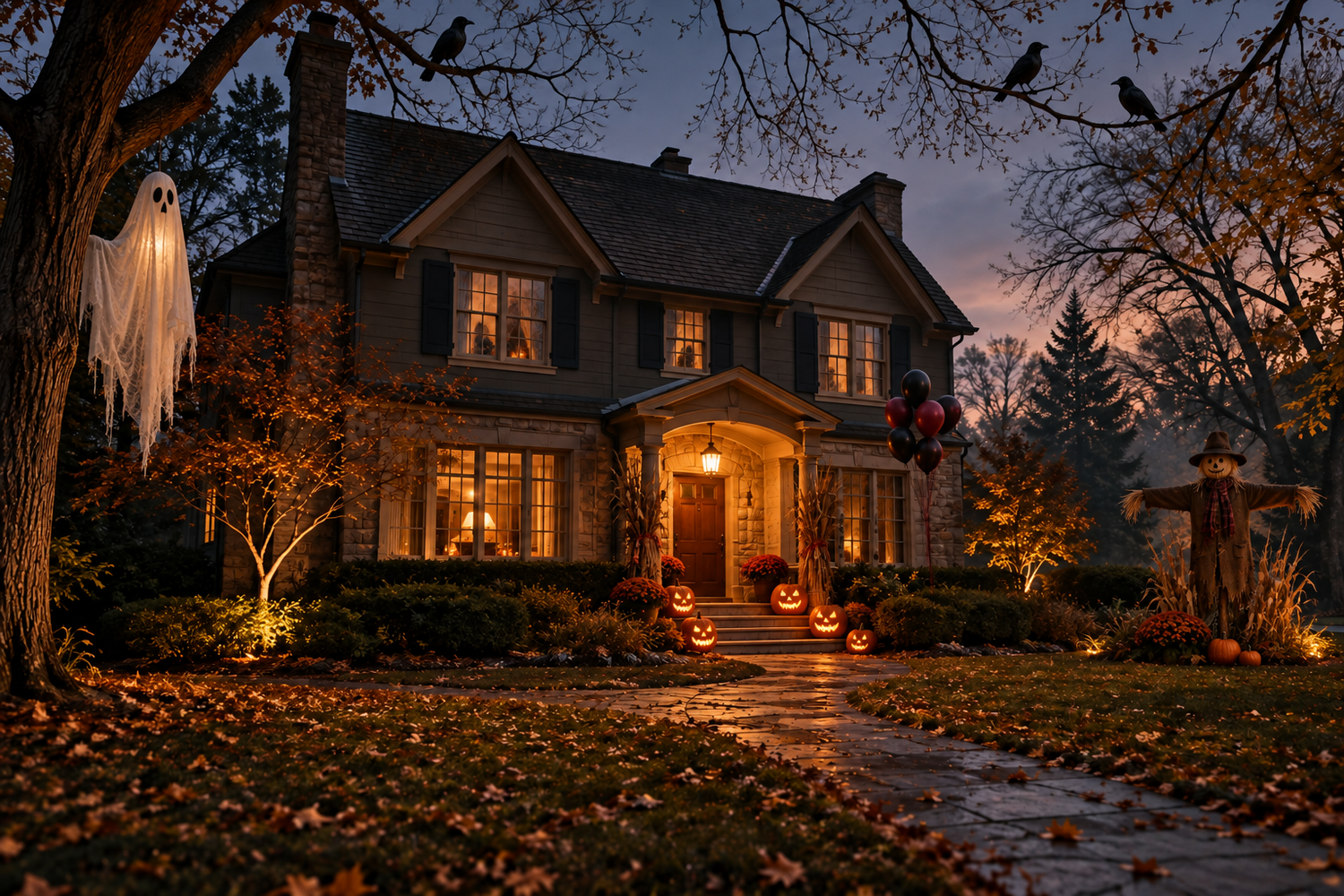
A House With Secrets
Every house has a story. A few prefer to keep you guessing.
By October, a familiar house can begin to feel slightly different.
The room at the end of the hall turns chilly. Evening arrives before you have finished dinner. A lamp throws a long shadow across the ceiling, and you notice a mark you are fairly sure was not there last spring.
There is probably an explanation. The interesting part is finding the right one.
Welcome to A House With Secrets, Reformation’s October Casebook. Over five installments, we are following the small mysteries, questionable promises, and inherited decisions that can make homeownership feel like a story with a few missing pages. On Halloween, we will open the doors to one fictional house and put what we have learned to use.
A little atmosphere. A clear head.
This is a Halloween series, so we are allowing ourselves some shadows. We are keeping the advice in the light.
The scenes are imagined examples, and the images are generated illustrations. They are not accounts of Reformation customers or proof of a particular construction defect. A cold room, a stain, or an unfamiliar alteration needs context before anyone can explain it responsibly.
The aim is to help you become a more observant homeowner. You should finish each case with a better question to ask and a sensible next step—not a new collection of things to worry about at three in the morning.
The five files on the desk
Our first case is a room that seems to have its own weather. It raises a useful question: before replacing a window or buying another heater, how do you establish what is making the space uncomfortable?
The second follows a ceiling stain that returns after being painted. The third examines an unusually easy renovation promise. The fourth considers the work a previous owner left behind, along with the information they may not have passed on.
Then comes the Halloween finale: seven clues in one fictional house. You will be able to open each verdict as you move through the story. Some clues will be less dramatic than they first appear. Others will show why certain situations require a prompt, practical response.
Your home is more than its finished surfaces
A photograph can show a beautiful kitchen without explaining what is above its ceiling. An addition can look natural from the street while depending on careful decisions about the existing house. A converted garage can offer useful space while raising questions about how it was designed and built.
That is part of what makes residential construction interesting. The visible result sits on top of decisions about structure, moisture, comfort, materials, and use. When we plan a remodel, we need to understand those relationships before deciding what should change.
Whether your house sits along a mature street in Upper Arlington or in a newer neighborhood around Dublin or Powell, its particular history matters more than its age alone. Older does not automatically mean defective. Newer does not mean there is nothing to investigate.
The homeowner’s field notes
Start with observations you can make safely from ordinary, accessible areas. Describe the location, when you noticed the issue, and whether it has changed. A dated photograph can help preserve that information when taking one is safe.
Avoid turning curiosity into exploratory demolition. Opening a wall, entering a crawlspace, or removing an electrical cover is not required to ask a good question. Some investigations belong with appropriately qualified professionals.
Three questions will follow us through the series: What do we actually know? What are we assuming? What would establish the next useful fact?
If you are already preparing for a project, our Before the Finished Photos series explains how difficult discoveries, additional work, and schedule changes should be discussed. This casebook approaches the house from another direction: the clues that start those conversations.
Open the first door
On October 10, we visit The Cold Room at the End of the Hall. There is an inviting chair, a good reading lamp, and a reason nobody stays long.
Until then, you have permission to enjoy the character of your home without diagnosing every creak. Houses can be complicated. Understanding them should make living in them feel easier.
The scenes in this October casebook are illustrative. A particular home requires evaluation on its own facts.