
A House With Secrets
Case 02 · The mark that refused to stay buried.
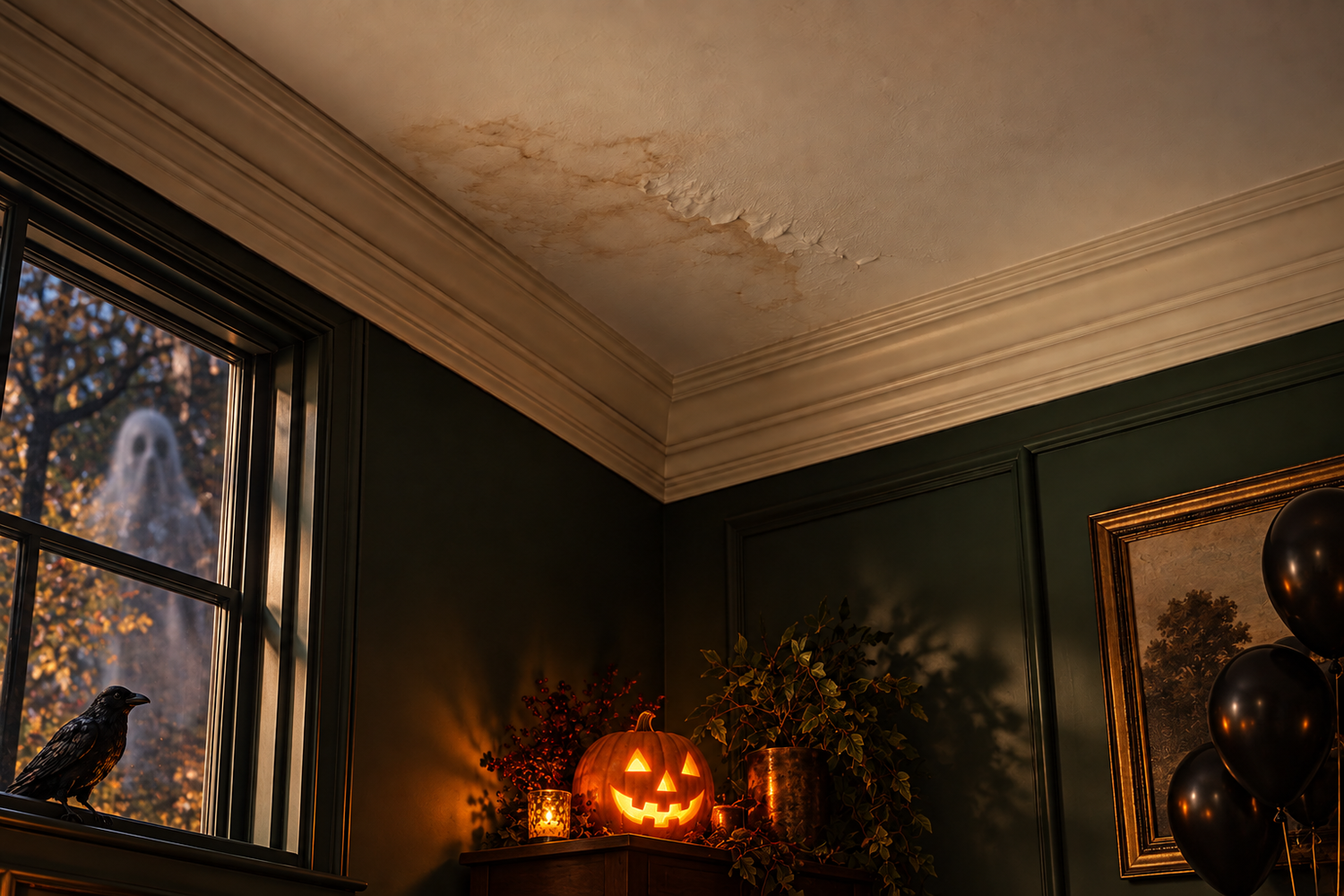
The ceiling was painted in April. By June, nobody remembered the mark. In our fictional October house, it returns during dinner: a faint brown outline just beyond the pendant light.
Someone looks up and says, “I thought we fixed that.”
Perhaps the surface was fixed. Perhaps the source was fixed and a remaining stain needs a different finish treatment. Or perhaps the original problem was never fully understood. The outline alone cannot settle the question.
That is where this case begins.
The clue is visible. The route may not be.
A mark on a ceiling is an observation, not a complete explanation. Its position may be useful, but a homeowner should not assume that the source sits directly above it or that every similar-looking mark has the same cause.
The investigation begins with the pattern. When did it appear? Is it changing? Was there recent rain? Has plumbing above or nearby been used? Was an earlier repair made, and what did that repair address?
Give the person evaluating the problem the history you actually know. “The mark reappeared this week” is useful. “The roof is leaking again” may turn out to be right, but it is still a conclusion until the source is established.
The previous repair has a story, too
Look for invoices, photographs, and descriptions of earlier work. A receipt that says “repair ceiling” may refer only to the finish. Another may document a specific plumbing or exterior repair. Those are different pieces of information.
If a contractor previously addressed the issue, contact them with the new observation and ask how it relates to the work performed. A returning mark warrants a conversation; it does not automatically establish fault or tell us what work is now required.
This is especially useful when you have recently bought the home. An old disclosure, a photograph from before the sale, or a previous owner’s description may help, but incomplete history is common. Be clear about which details are documented and which were passed along in conversation.
The house may be withholding information. The repair paperwork should not have to.
Moisture changes the priority
The EPA’s guide to moisture and mold in the home emphasizes addressing the water problem and drying affected materials promptly. It also explains that painting over moldy surfaces does not resolve the underlying issue. Where hidden mold is suspected, investigation may require an experienced professional because disturbing concealed growth can spread it.
A stain by itself does not establish that mold is present, identify a substance, or tell you the full extent of concealed damage. Avoid diagnosing a wall or ceiling from its color or from a photograph online.
If water is actively entering, arrange prompt help appropriate to the source and conditions. Keep away from a sagging or unstable ceiling, water near electrical equipment, or an area that appears unsafe. Do not puncture the ceiling or open the assembly to investigate it yourself. An immediate hazard takes priority over photographs and estimates.
Gather evidence without creating a second problem
From a safe, accessible position, take a dated photograph that shows both the mark and its location in the room. Note the weather and any relevant recent activity. Record changes rather than repeatedly touching, scraping, or testing the affected surface.
Explain whether the area seems different from the last time someone examined it. Share the earlier repair record when you have it. Ask what the evaluator needs to establish and whether another trade or specialist may be necessary.
You do not need to arrive with the diagnosis. Your contribution is the timeline. A professional’s contribution is an evaluation suited to the condition, including an explanation of the limits of what can be confirmed at that stage.
If access or opening is proposed, discuss its purpose and the plan for protecting and restoring the surrounding area before work starts.
Do not bury the question beneath the remodel
A planned kitchen, bathroom, or basement project creates an opportunity to address an unresolved condition. It also creates a temptation to believe that everything will be handled somewhere inside the larger scope.
Name the issue explicitly. Ask whether investigating it is included, what assumptions the proposal makes, and how additional findings would be discussed. New cabinets and fresh drywall should not make an old unanswered question harder to reach.
At Reformation, proposed changes are explained and documented in a written change order for review and sign-off. Except in an emergency, change-order work waits for signed written approval. Our guide to hidden conditions explains that conversation in more detail.
What closes this file?
Before the final finish is restored, ask what was found, what was done about it, and what supports moving forward. Keep the explanation with the project records. If follow-up observation is appropriate, clarify what you should watch for and whom to contact.
There is no need to give every ceiling mark a sinister backstory. There is also little value in paying repeatedly to make the same unanswered question a different shade of white.
The best ending is not simply a ceiling that looks better. It is a repair you understand.
The scenes in this October casebook are illustrative. A particular home requires evaluation on its own facts.