
Part 2 · Before the Finished Photos
You may have arranged time away from work, promised the guest room to family, or circled a date when you thought the kitchen would finally be yours again. Then the schedule changes.
For a contractor, that may mean coordinating the next step. For you, it can mean rearranging several parts of your life at once. Both realities belong in the conversation.
Construction schedules need to be taken seriously. They also need to be discussed honestly when the facts change. The useful question is what caused the delay, what it affects, and what can reasonably happen next.
A schedule connects work that depends on other work
A project is a sequence of activities with relationships between them. Some work can happen at the same time. Other work needs an earlier step to be complete, an inspection to occur, or a particular material to arrive.
Imagine that the correct windows for an addition have not arrived. The effect depends on the stage of the project and the details of the installation. Certain work may continue while other work has to wait. A contractor should explain that relationship in terms you can understand.
A day with fewer people on site does not, by itself, tell you whether the project is on track. Neither does a busy site prove that the finish date is secure. Ask what milestone the work is moving toward and what must happen before the next one.
The reason should be more specific than “construction happens”
Weather, delivery problems, newly discovered conditions, inspection coordination, and changes to the agreed work can affect timing. Each deserves an explanation connected to the actual project.
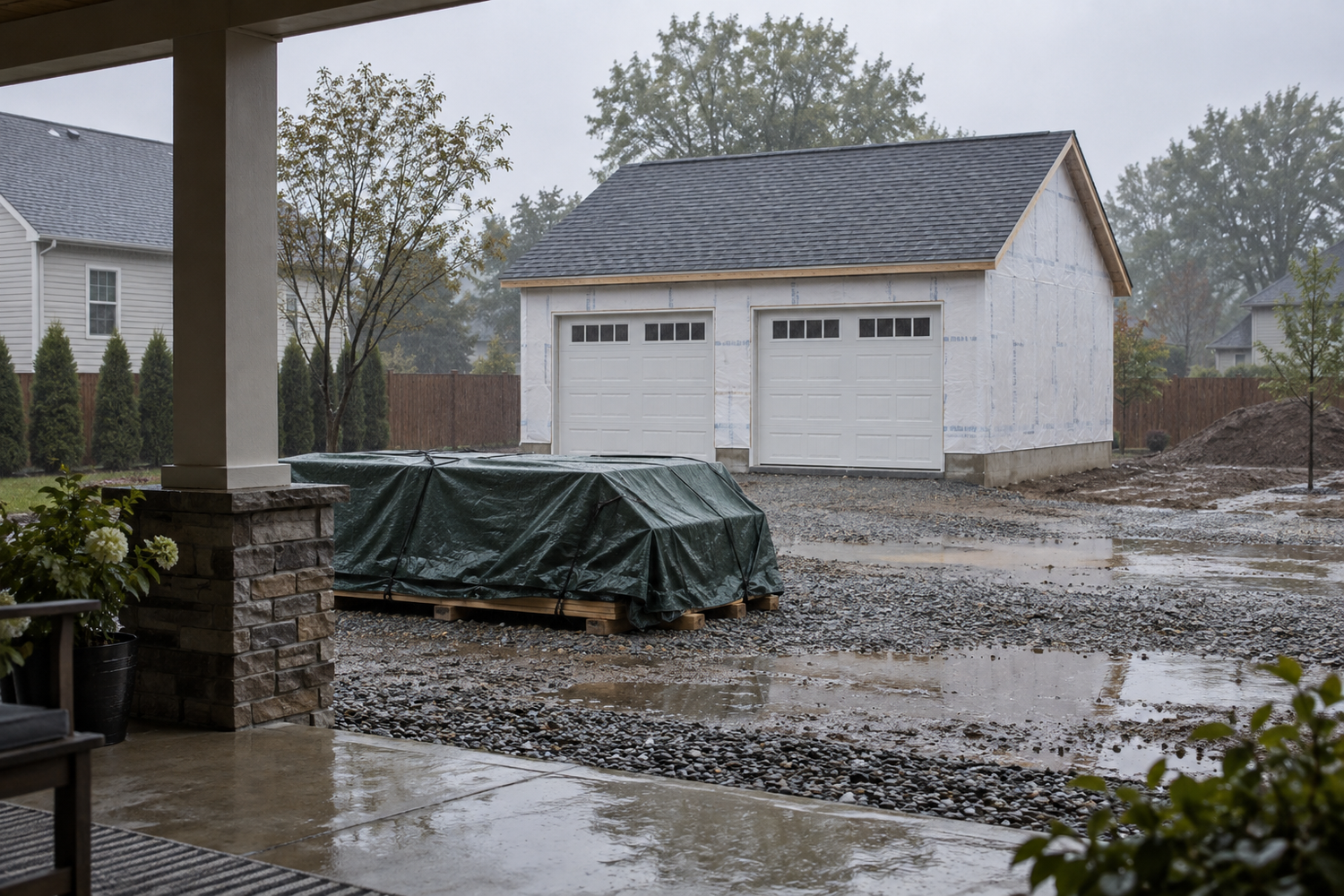
For an outdoor garage project in Central Ohio, a stretch of wet weather may affect a particular operation or site access. That does not mean every day of rain creates the same delay. The relevant discussion is which activity is affected, why it cannot proceed as planned, and when the conditions will be reassessed.
The same standard applies to a supplier issue. Which item is delayed? Is its arrival confirmed or estimated? Does an alternative exist, and would choosing it change the appearance, price, or performance you approved?
Some delays also involve coordination mistakes or missed commitments. A homeowner should be able to ask about those directly. Naming outside factors should not prevent an honest examination of how the project is being managed.
How Reformation communicates a timing change
At Reformation, delays are communicated as promptly as possible. If we foresee a delay in the future, we communicate it immediately. The same approach applies to other information specific to your job.
Those conversations may happen through the JobTread portal, text, a phone call, email, or face to face. The right channel depends on the situation, and important decisions need a clear record that everyone can return to.
An early warning may arrive before there is a confirmed replacement date. In that situation, the conversation should distinguish what is known from what is still being checked. Giving a reassuring date without a sound basis only creates another expectation to disappoint.
An honest update explains what changed, what it affects, and what information will make the next step clearer.
Recovering time involves choices and limits
It is reasonable to ask whether the sequence can change. Could another area move forward? Would a different product solve the problem? Can a decision be made now that protects a later milestone?
Those options may have tradeoffs. Switching materials may change the look you wanted. Reordering tasks may require additional coordination. Rushing a step that needs the proper conditions can create problems that outlast the delay.
A recovery plan should explain those tradeoffs. It should also avoid promising that every lost day can be recovered. Sometimes the responsible answer is a revised timeline and a practical plan for living with it.
Homeowner decisions can affect timing, too. Selection and approval deadlines are most useful when discussed in advance, with enough information to make the choice. If you need more time, say so early and ask which later activities depend on that decision.
Five questions when a date moves
- What caused the delay, and which part of the work is affected?
- Does this change one milestone, the completion date, or both?
- What work can continue, and what options could reduce the impact?
- What information is still pending, and when will we revisit the plan?
- What household arrangements should I reconsider now?
The National Association of Home Builders’ homeowner guidance emphasizes discussing the schedule and maintaining clear communication during a remodel. Those conversations are especially valuable when expectations need to change.
Tell us which dates matter in your life
A family visit, a work commitment, or the need for an accessible bathroom may be far more consequential than a preferred date on a calendar. Explain the reason behind the date when planning begins.
That information helps shape the discussion about feasibility, sequencing, and alternatives. It does not make every deadline achievable, but it gives the contractor a better understanding of what is at stake.
You should leave a difficult schedule conversation understanding the next step, even if the news is disappointing. When the plan changes, clarity becomes more valuable—not less.