
Part 4 · Before the Finished Photos
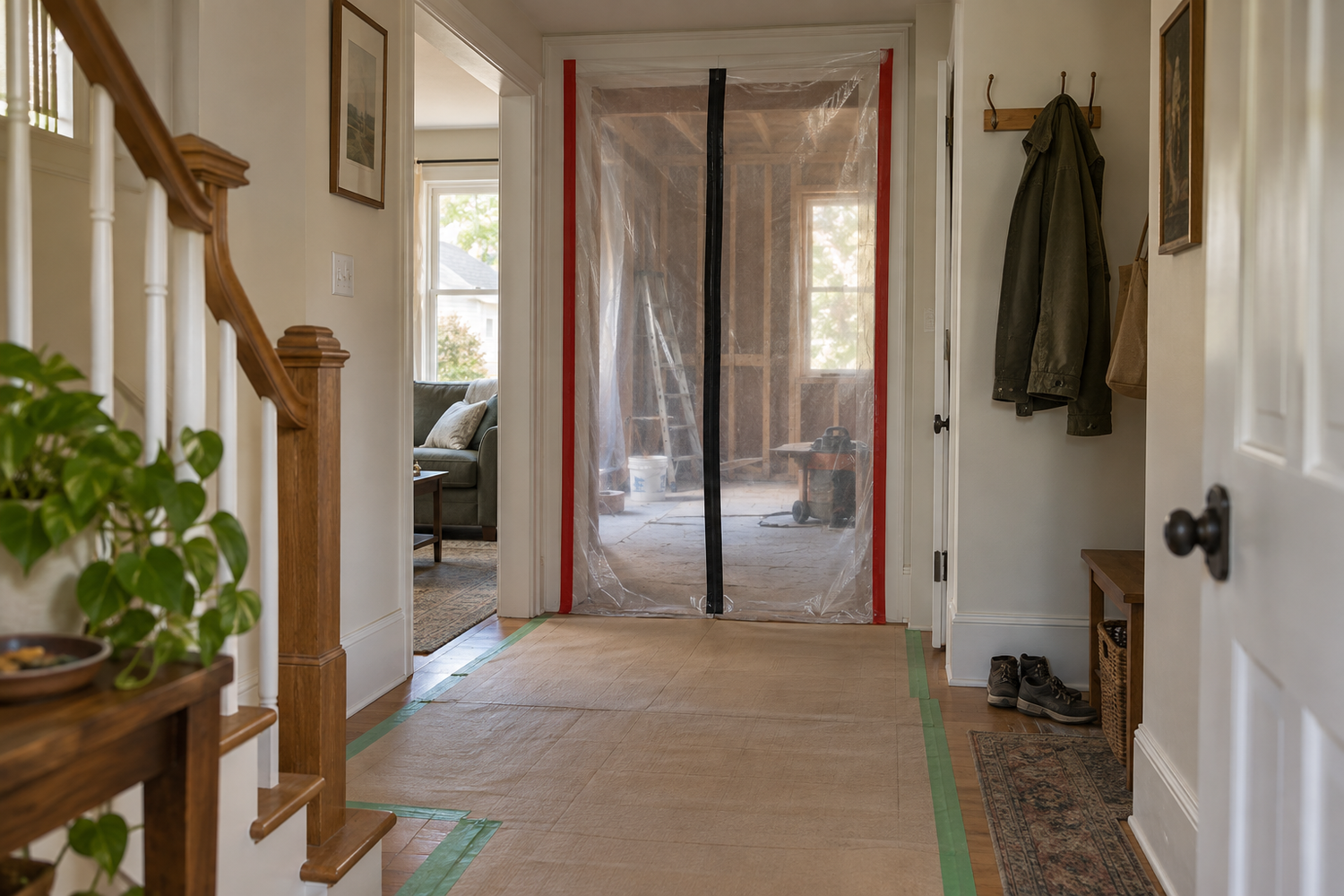
At the end of the day, the crew leaves. You may still be living with the project.
There may be a protected path through the hallway, a room you cannot use, or a morning routine that takes longer than it used to. Even when the work is moving forward, sharing your home with construction can become tiring.
That part of the experience deserves planning. A discussion about the finished space should include a discussion about the weeks or months before you can use it.
Describe a normal day before it changes
Tell your contractor how your household works. Perhaps you take client calls from a home office. Someone sleeps during the day. A child arrives home before the adults. A pet heads for any open door.
These details can affect access, communication, and the way you prepare. They are easier to discuss before a delivery arrives or a noisy task begins than in the middle of an already difficult morning.
The National Association of Home Builders’ guide to living through a remodel recommends discussing practical arrangements before work begins, including access, off-limits areas, children and pets, parking, work hours, and cleanup. A pre-construction conversation gives those ordinary details the attention they deserve.
Write down the arrangements that matter to your household. Everyone should understand the same plan, including who to contact when it needs to change.
Establish where construction and home life meet
Which entrance will workers use? Where will deliveries go? Which rooms are part of the work area, and which need to remain private? Will a bathroom be available to the crew, and what arrangement has been agreed upon?
A detached garage may leave the kitchen untouched while changing how you use the driveway and yard. An addition can affect access to an existing room. A first-floor renovation may interrupt several daily routines at once.
The boundary needs to be clear. Ask when an area can be entered and how that will be communicated. Keep children and pets out of the work area, and do not assume that a space is ready to use because no one is working in it at that moment.
If you need access for a specific reason, arrange it with the contractor. Moving through an active work area is different from walking through an ordinary room in your house.
Protection and cleanup need a shared definition
Ask what protection is planned for the areas affected by the work. That may involve floor protection, barriers, or other measures appropriate to the particular project. Discuss which belongings you should remove and where stored items can remain accessible.
Construction activity can create dust and disturbance even with precautions. That reality makes a clear protection plan valuable. It should not be used to dismiss careless handling or damage.
Daily jobsite cleanup and final cleaning may involve different tasks. Ask what each includes in your scope, what areas are covered, and what condition to expect at the end of a workday. “We clean up” is easier to evaluate when everyone knows what the phrase means.
It can also help to document the condition of nearby surfaces before work begins. If something later appears damaged, report it promptly and identify the location. The purpose is a clear conversation about the facts and the next step.
Plan for the routines you cannot pause
Think through meals, laundry, bathing, work, and getting in and out of the house. Which activities remain practical in the home? Which may need a temporary arrangement? The answer depends on the scope and the household.
If a utility interruption is anticipated, discuss its expected timing and what you need to prepare. If a change affects that plan, timely communication becomes especially important. Do not make assumptions about continued access to a room or service that is part of the work.
Some households can accommodate a project with a few adjustments. Others may need to consider time away from the house for a particular phase. Discuss those needs early enough to assess the options and their cost before the disruption arrives.
The best time to explain how your household lives is before construction changes its daily routine.
Five questions about living through the work
- Which spaces and entrances will be available to our household?
- What protection, daily cleanup, and final cleaning are included?
- How should we plan for children, pets, visitors, and working from home?
- What interruptions to rooms, utilities, or parking should we anticipate?
- Who should we contact when a household arrangement needs to change?
At Reformation, job-specific information and delays are communicated as promptly as possible, with anticipated delays communicated as soon as we foresee them. Conversations may take place through JobTread, text, phone, email, or face to face.
Let us know when a disruption affects you in a way we may not realize. A contractor cannot understand every household need from the plans alone.
Frustration is useful information when it is explained
You can be pleased with the direction of the work and tired of living around it. Those feelings can exist together.
Be specific about what is becoming difficult. A blocked entrance, an unexpected arrival, or uncertainty about the next day gives the contractor something concrete to address. If an arrangement cannot be changed, you should still receive a clear explanation.
The finished room matters. So does the experience of the people who live beside the work. Discussing that experience early helps make the messy middle less mysterious and the responsibilities on both sides more understandable.