
Can You Build a Garage or Addition During an Ohio Winter?
Part 4 of Next Year’s Home Starts This Fall.
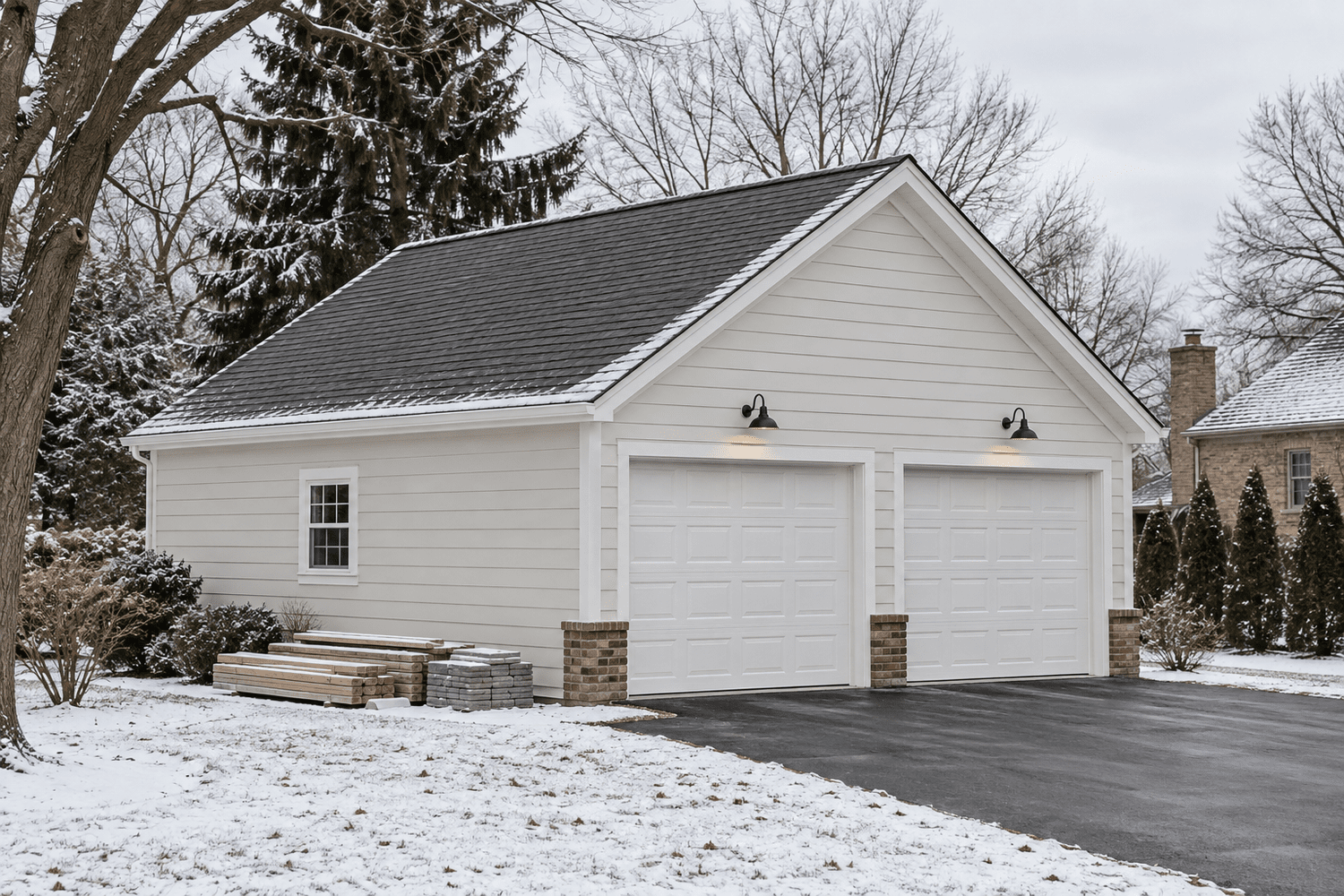
It is a fair question, especially when a project has been on your mind all year: if we start planning now, does everything have to wait until spring?
Some garage and addition work can take place during winter. That does not mean every project should begin then, or that a cold-weather schedule can be treated like a summer schedule with heavier coats.
A useful answer starts with the actual house, the site, the proposed construction, and the stage of work. An enclosed garage waiting for interior work presents a different situation from an addition that still needs excavation and a connection opened through the existing house.
This is Part Four of Next Year’s Home Starts This Fall. The goal is to help you ask better questions about winter construction—and recognize when planning now is more valuable than rushing to break ground.
The stage of the project matters
“Building in winter” can describe several very different situations.
It might mean developing plans and making selections while construction is still months away. It might mean completing work inside a properly enclosed structure. Or it might mean beginning the weather-exposed portions of a new building in the middle of the season.
Those are not interchangeable decisions. Before asking whether a project can happen in winter, ask what work would actually occur during the coldest stretch and what would need to be in place first.
For an addition, the connection to your existing home deserves particular attention. How will the occupied rooms be protected? When would the existing exterior be opened? What needs to be ready before that step? Your family still has to live in the house while the work proceeds.
Concrete needs a cold-weather plan
Foundation and slab work cannot be judged by whether the afternoon feels pleasant enough to stand outside.
The National Ready Mixed Concrete Association explains that cold conditions slow concrete’s setting and strength development. Fresh concrete needs protection from freezing, and the surfaces it contacts must be free of ice and snow and above freezing before placement. Protection and curing arrangements need to be ready before the work begins and maintained afterward; an accelerating admixture does not replace that protection.
For a homeowner, the practical question is not which technical method to specify yourself. It is whether the proposed work includes appropriate preparation, protection, and follow-through for the conditions. Ask how those requirements affect the price and schedule, and what would cause the work to be postponed. The association’s guide to cold-weather concreting offers useful background for that conversation.
Access and weather protection belong in the scope
Think about how the work reaches the building site. A detached garage behind the house may depend on access across part of the yard. An addition may require deliveries and equipment in an area your family normally uses every day.
Discuss where materials will be stored, how access will be maintained, and how the contractor intends to manage changing ground and weather conditions. Also discuss what happens if access becomes unsuitable for the planned operation. A schedule should have room for decisions based on actual conditions.
As construction progresses, protection remains a consideration. Roofing, exterior openings, temporary protection, and the sequence for closing in the structure all affect how exposed the work remains.
Moisture deserves attention as well. APA’s guidance for builders explains that the effects of exposure on wood structural panels depend on the conditions and the material’s ability to dry. There is no single exposure duration that answers every situation. Ask how materials will be protected and assessed before later work covers them.
The useful question is not simply, “Can we start?” It is, “What conditions do we need to do this part of the work properly?”
Compare realistic options, not just start dates
A winter start can sound appealing because it feels like progress. A spring start can sound easier because the season feels more predictable. Neither label tells you enough on its own.
Compare what each option actually includes. Are weather protection and possible interruptions accounted for? Which portions of the work are weather-sensitive? What approvals, selections, and deliveries must happen first? How would a pause affect the house and the household?
Do not assume winter automatically brings a discount or a faster opening on a contractor’s schedule. Availability, costs, and sequencing depend on the particular project and the people and materials required to complete it.
A credible conversation should leave you with a clearer picture of the tradeoffs, including what cannot yet be promised.
Five questions before committing to winter work
- Which parts of our project would be exposed to winter conditions?
- What protection is included for the work, materials, and occupied house?
- How will access, storage, and deliveries work on our property?
- What conditions could pause construction, and how will that be communicated?
- Would using this season for design and approvals produce a better construction plan?
Weather also does not replace the normal approval process. For a project in Powell, the City of Powell Building Department is a local starting point. Confirm the requirements with the authority responsible for your property before setting a construction date.
Winter can still be productive before construction begins
Even when a winter start is not the right fit, the season can be useful. You can settle the layout, understand the property constraints, work through selections, and develop a clearer scope.
That is especially helpful for a garage or addition, where decisions about location, size, access, and connection to the house affect everything that follows. Time spent resolving those questions is real progress.
At Reformation, we want to understand what the finished space needs to do for you before the calendar starts driving the conversation. Bring us the idea, the property, and your timing goals. We can begin with the questions that determine an appropriate next step.